I stood there in the lobby of a generic building in Dogenzaka, Shibuya, staring at a wall of glowing buttons. My heart was pounding. Not because of what I was about to do—well, mostly not—but because I had absolutely no idea how to get into a room.
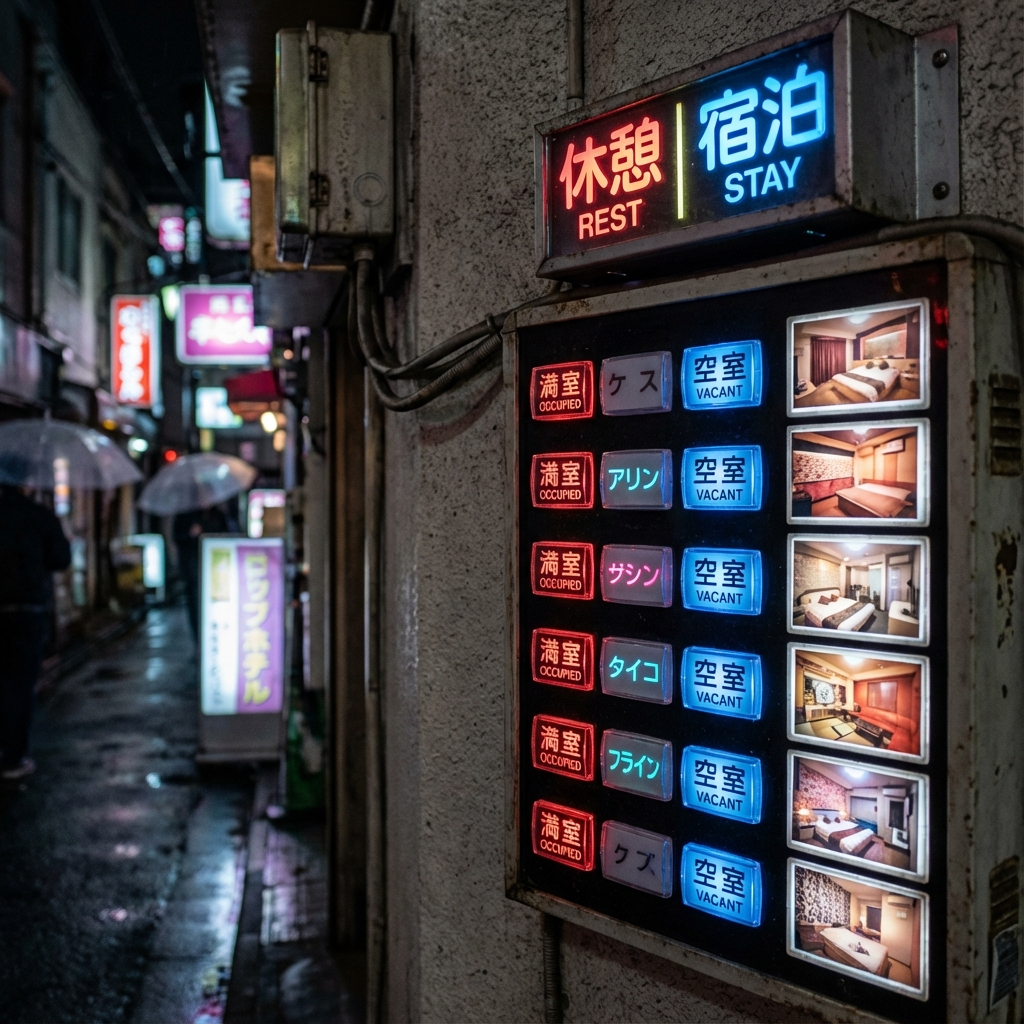
There was no receptionist. No bell. Just a massive, neon-lit panel filled with photos of beds, baths, and what looked like medieval torture devices (it was a karaoke machine, I later learned). The air smelled faintly of chemical floral detergent and stale cigarettes.
I tried to walk past it. A buzzer sounded, loud and aggressive. I froze. A couple walked in behind me, giggling, pressed a button on the panel, took a receipt that spat out, and vanished into an elevator. I felt like an absolute idiot. I was standing in a sex hotel lobby, completely paralyzed by a vending machine interface.
Usually, booking a hotel involves a smile and a credit card. In Japan’s love hotel industry (or “fashion hotels” / “boutique hotels” if they’re feeling classy), it involves navigating a system designed for extreme privacy, which ironically makes it extremely confusing for first-timers. I messed it up, lost $50, and accidentally ordered a cosplay outfit I didn’t fit into. I’m writing this so you don’t have to.
目次
The Concept: Why Do Looking Like Castles?

Before we touch the buttons, you need to understand why this system exists. It’s not just for illicit affairs (though, obviously, that happens).
In Japan, houses are small. Walls are thin. Many young couples live with their parents until they are married, or even after. “Netflix and chill” isn’t an option when your mom is in the next room making tea.
Love hotels are a necessity of urban Japanese infrastructure. They provide space, soundproofing, and luxury that normal apartments lack. That’s why you see them shaped like castles, cruise ships, or UFOs. It’s an escape from reality.
The “Panel” System: It’s Just a Giant Vending Machine
Forget everything you know about checking in. You don’t “book” a love hotel in the traditional sense. You don’t call ahead (usually). You definitely don’t use Booking.com for the good experienced ones (though some “business-love” hybrids are appearing online).
The Golden Rule: If the picture on the panel is LIT UP, the room is AVAILABLE. If it is DARK (or says 満室 – Manshitsu), it is TAKEN.
I spent five minutes trying to press the button for a darkened room because I liked the look of the jacuzzi. Nothing happened. I looked like I was trying to break into a secure server room. Don’t be me.
How to Pick Your Room
- S-Type / A-Type / B-Type: These refer to room tiers. “S” is usually the “Royal Suite” or similar—expect massage chairs, saunas, and massive square footage. “C” or “Standard” might just be a bed and a bath.
- The Button: Press the button accompanying the lit-up photo. It requires a firm press.
- The Ticket: Usually, a small ticket will print out nearby, or the button itself will flash. This claim ticket is your lifeblood. Do not lose it.
“Rest” vs. “Stay”: The Trap to Avoid
This is where I lost money my first time. The pricing structure is rigid and confusing if you can’t read kanji.
Love hotels have two main time blocks. If you mix them up, the automated system will charge you aggressively.
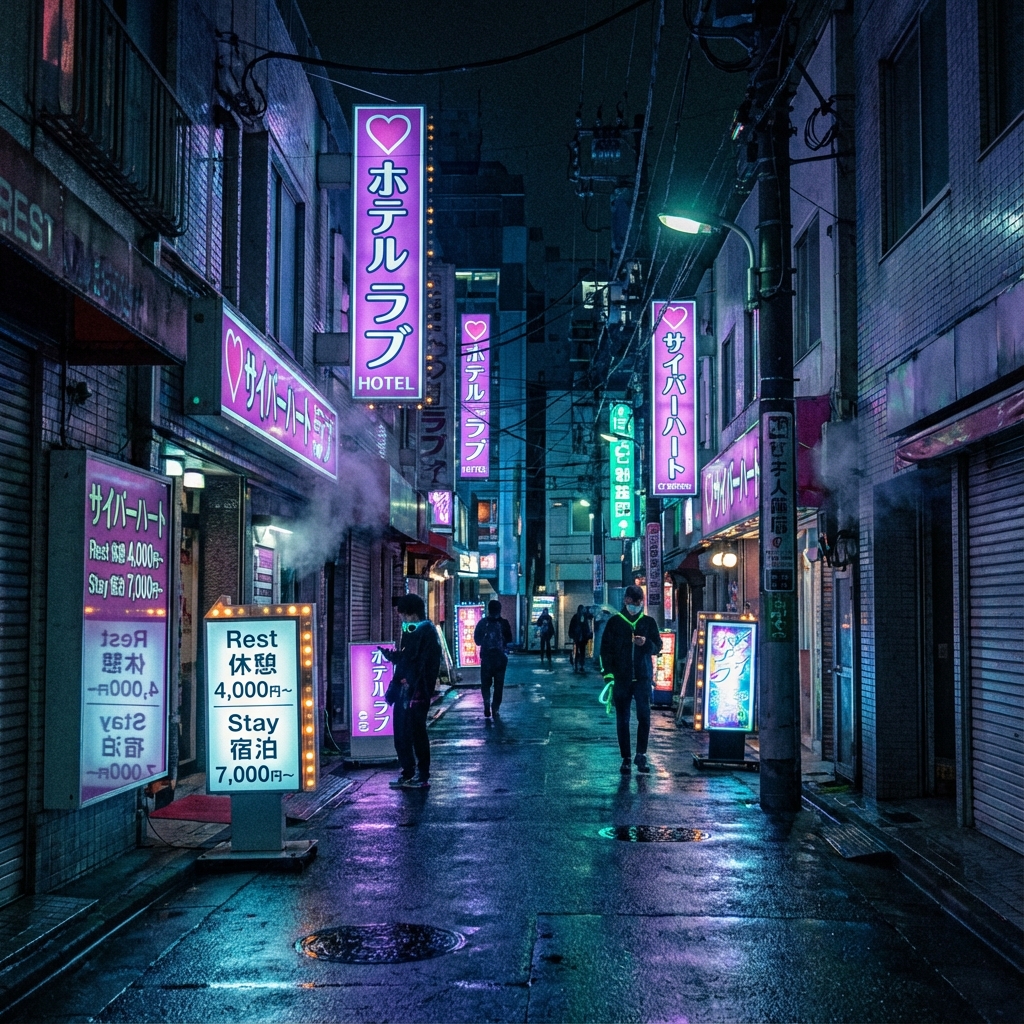
1. Rest (Kyukei – 休憩)
This is for a “short break.” usually 2-3 hours.
- Availability: Usually all day (e.g., 6:00 AM to midnight).
- Price: Cheap. ¥3,000 – ¥6,000 depending on luxury level.
- The Trap: If you verify the price for “Rest” but stay for 3 hours and 1 minute, you will be charged an “Extension Fee” (Encho – 延長) which is often ¥1,000 per 30 mins. It adds up fast.
2. Stay (Shukuhaku – 宿泊)
This is the overnight plan.
- Check-in Time: Crucial. “Stay” usually doesn’t start until 10:00 PM or 11:00 PM. On weekends, it might be as late as midnight.
- The Trap: If you check in at 7:00 PM thinking you’re getting a head start on sleep, you are technically on a “Rest” cycle. By the time 10:00 PM rolls around, you will have cycled through multiple “Rest” extensions, or the system will make you check out and check back in.
3. Service Time (Free Time – フリータイム)
This is the hidden gem. It’s a flat rate for a long block during off-peak hours.
- Example: “Mon-Fri: 6:00 AM to 5:00 PM fixed rate ¥5,000”.
- Use Case: Perfect for jet lag naps, working remotely in silence, or just hiding from the Tokyo summer heat.
The “Invisible” Check-In
After you grab your ticket from the panel, you head to the counter. But it’s not a counter. It’s often a small, frosted glass window.
Scenario A (The Machine): You go straight to the room number on your ticket. The door is unlocked. You walk in. CLICK. The door auto-locks behind you. You cannot open it from the inside until you pay the machine. You are now a prisoner of love (hotel).
Scenario B (The Hands): You pass a window. You slide your ticket under a small slot. A pair of gloved hands (you never see the face) takes it and slides back a key. Utter silence. Occasionally, a disembodied voice will say “Three hours?” over a speaker. You just nod.
Inside the Room: Why It’s Better Than a Hiltons
Once you are in, the value proposition becomes clear. Japanese love hotels are remarkably well-equipped.
The “Headboard Control Panel”
Beside the bed (which is usually king-sized and surprisingly comfortable), there is mission control. Dozens of buttons.
- Lighting: “Sexy,” “Romantic,” “All Off,” “Neon.” You can customize the vibe instantly.
- Music/BGM: Channels for jazz, pop, or absolute silence.
- Room Service: Ordered via a tablet or TV screen. The food is often “family restaurant” quality—decent curries, pastas, and drinks.
- Rental Items: This is where it gets wild. You can rent cosplay outfits (nurse, police, school uniform), hair curlers, specialized shampoos, phone chargers, and yes, adult toys.
The Bath
The bathroom is often larger than an entire APA Hotel room. Jacuzzi jets (Jet Bath) are standard. Many have TVs embedded in the wall so you can watch variety shows while soaking. Some have “Rainbow Baths” where the water lights up.
Payment: The Pneumatic Tube Surprise
Checking out is just as discreet as checking in.
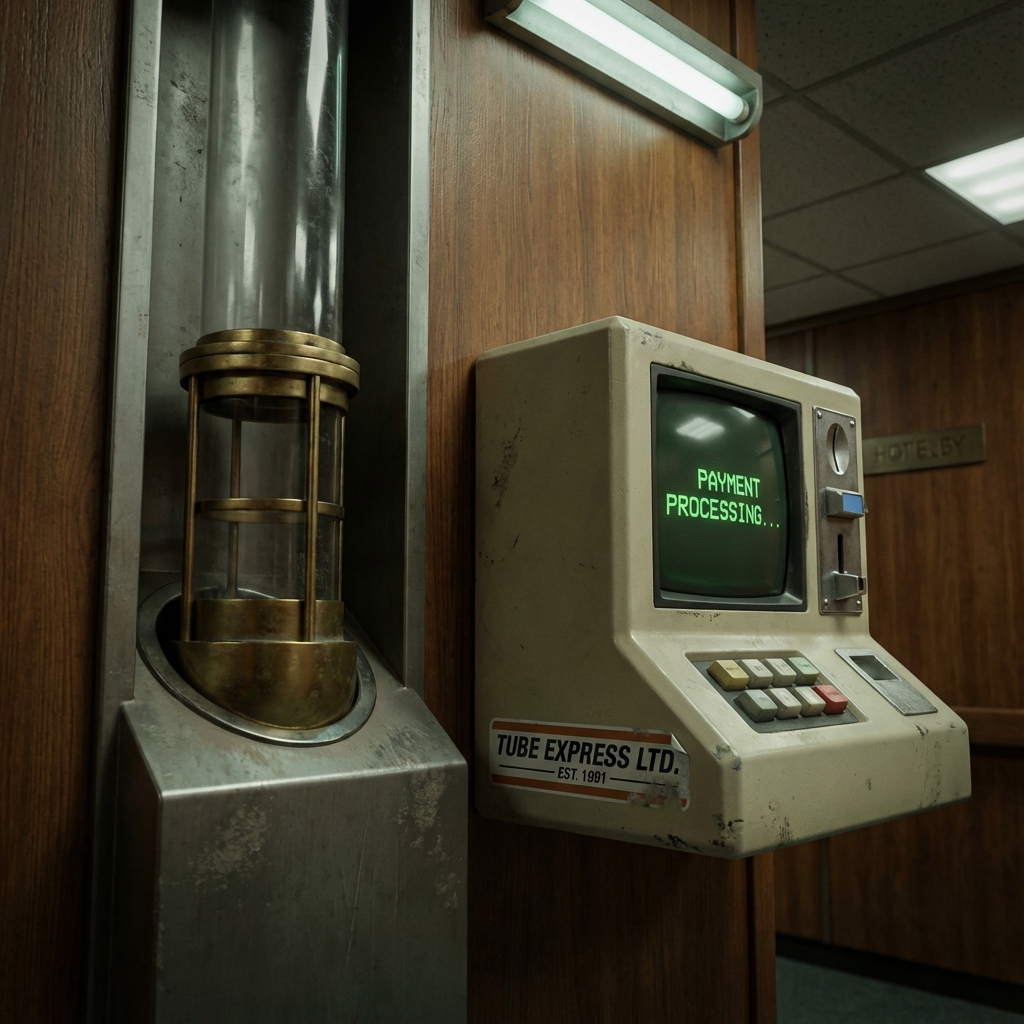
In older hotels (specifically one I visited in Ikebukuro), when you want to leave, you call the front desk. They don’t come to your door. A pneumatic tube (like at a 1990s drive-thru bank) shoots out of the wall near the door. You put your cash in the capsule, shove it in the tube, and WHOOSH—it sucks it up to the office. Moments later, change and a receipt shoot back down. It’s engineering genius.
Modern places just have a payment kiosk near the door. It looks like a self-checkout at a grocery store. It accepts cards, but cash is king in this industry. Privacy-conscious locals prefer cash so “Hotel Casanova” doesn’t appear on their credit card bill.
Best Areas to Find Them
You can find them anywhere, but these are the “Love Hotel Hills”:
- Shibuya (Dogenzaka): The most famous. Trendy, huge variety, foreigner-friendly. Walk up the hill from the 109 building.
- Shinjuku (Kabukicho): Wild, gritty, and endless. Located right in the middle of the red-light district. Convenient but chaotic.
- Uguisudani: The connoisseur’s choice. Yamanote line station. It’s quieter, cheaper, and has some of the most historic/retro hotels.
- Ikebukuro (North Exit): A massive cluster. Very competitive pricing.
A Note on Company (And How to Find It)
Sometimes you figure out the system, find the perfect room with a light-up dance floor, but realize you’re missing a key component: a partner.
If you are traveling solo and looking for company, do not follow the street touts in Kabukicho. They will promise you the world, drag you into a bar, and charge you $2,000 for a drink.
For a safer, clearer experience, digital is the way to go.
Tokyo Escort OTOME is a solid option for foreigners. Unlike many domestic services that hang up if you don’t speak fluent Japanese, they have a system designed for inbound visitors (“Tokyo Escort OTOME”). You can browse cast members effectively, see who is available, and book without the awkward telephone charades. It removes the ambiguity of the “will they, won’t they” transaction.
Summary: Don’t Panic
It feels illicit. It feels like you’re doing something wrong. But you aren’t. It’s just a hotel.
1. Look for the panel. Lit = Open.
2. Watch the clock. 10 PM is the magic hour for stays.
3. Bring Cash.
4. Lock the door.
Once you get used to the space, the amenities, and the sheer weirdness of it, going back to a cramped business hotel feels like a downgrade. Who needs a concierge when you have a rainbow jacuzzi?








コメント